

Account Takeover
Monitoring
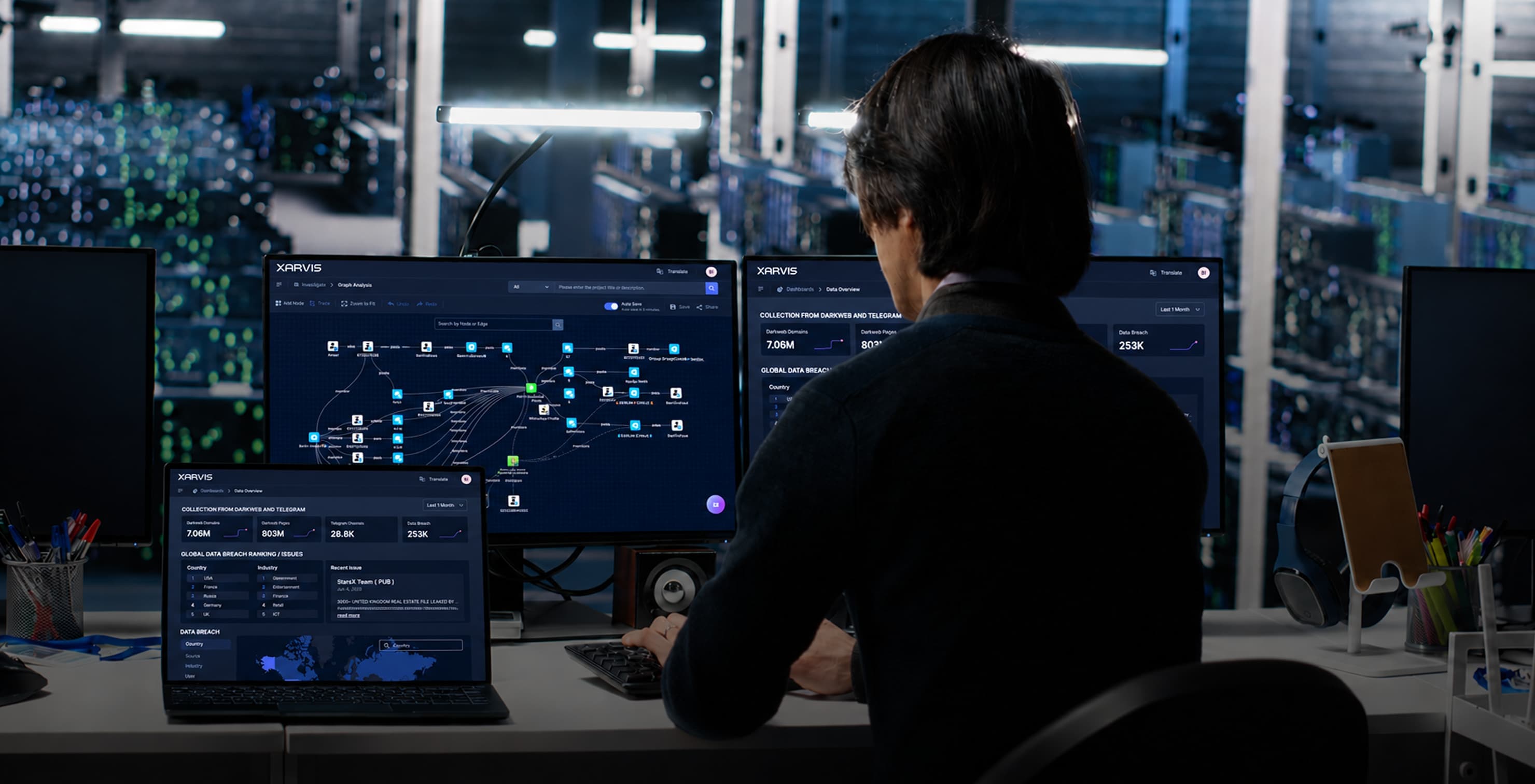
Beyond Detection, Toward Digital Resilience
See the Risk Behind Every Account
Knowing the Risk
Behind Every Account
Account Takeover Monitoring goes beyond the credentials themselves, proactively identifying real exploitability and the security risk it poses to your organization.
Exposed Accounts, Unclear Impact
Credentials Exposed, Unknown Impact.
Single Account Takeover,
Hidden Impact
- Abnormal logins or account takeovers are detected, but it is not easy to grasp which systems and data the attacker subsequently accessed and whether it led to further compromise.
- Because a single account takeover can be the starting point for a full system breach, a framework that analyzes account-centric access history alongside associated assets is needed.
Risk Without Context
- Administrator accounts and regular user accounts carry different risk levels, but most security events are handled at the same level, making it difficult to judge what to respond to first.
- Without considering an account's privilege level, data sensitivity, and business impact together, there is a danger of missing account takeovers that carry genuinely high risk.
Alert Overload,
Investigation Delays
- Administrator accounts and regular user accounts carry different risk levels, but most security events are handled at the same level, making it difficult to judge what to respond to first.
- Without considering an account's privilege level, data sensitivity, and business impact together, there is a danger of missing account takeovers that carry genuinely high risk.

Account-centric
Threat Visibility & Response
Response Framework Built Around Account Threats
What is Account Takeover Monitoring?
Administrator accounts and regular user accounts carry different risk levels, but most security events are handled at the same level, making it difficult to judge what to respond to first. Without considering an account's privilege level, data sensitivity, and business impact together, there is a danger of missing account takeovers that carry genuinely high risk.
Account-centric Attack Visibility
By comprehensively analyzing authentication information and user behavior around the account, it transparently visualizes an attacker's movement path across multiple systems and even the scope of further hidden compromise.
Relationship-based Impact Analysis
By analyzing the connections among users, systems, and data so that the compromise of a single account does not spread across the entire organization, it assesses the potential for the attack to spread and its potential impact, and identifies cascading risks that are difficult to grasp from a single event.
Risk-driven Decision Support
By comprehensively assessing account criticality, access privileges, data sensitivity, and business impact, it prioritizes the identification of genuinely high-risk incidents and presents a response direction, allowing limited security resources to focus on the most important threats.
Risk-based Account Exposure Intelligence
Credential Exposure Intelligence, Prioritized by Risk
Critical Asset Filtering for Account Risk Assessment
High-privilege accounts connected to critical assets and the accounts of key employees can lead to greater business impact than regular accounts. Using a critical asset classification system and employee account filtering, S2W selects leaked information and provides stealer infection data alongside it to support the assessment of account leak risk.
Prioritized identification of critical assets
Prioritized identification of leaked information centered on critical assets and key employee accounts
Dimensional stealer infection analysis
Analysis of the causes and risk level of account leaks based on stealer infection data
Deriving response priorities
Deriving response priorities that consider account criticality and asset value

Preventing Cascading Risks from Account Exposure(ATO+DRP)
Leaked account information does not stop at mere exposure—it becomes the starting point for actual account takeover and further compromise. By correlating dark web leak data with internal account data, S2W identifies the potential for account takeover early and helps prioritize the management of at-risk accounts.
Account information correlation analysis
Correlating dark web leak data with internal account information
Early identification of compromise potential
Early identification of the potential for account takeover and further compromise
Prioritized management of at-risk accounts
Prioritized management of at-risk accounts considering privilege level and business impact

Critical Asset Filtering for Account Risk Assessment
High-privilege accounts connected to critical assets and the accounts of key employees can lead to greater business impact than regular accounts. Using a critical asset classification system and employee account filtering, S2W selects leaked information and provides stealer infection data alongside it to support the assessment of account leak risk.
Prioritized identification of critical assets
Prioritized identification of leaked information centered on critical assets and key employee accounts
Dimensional stealer infection analysis
Analysis of the causes and risk level of account leaks based on stealer infection data
Deriving response priorities
Deriving response priorities that consider account criticality and asset value
Preventing Cascading Risks from Account Exposure(ATO+DRP)
Leaked account information does not stop at mere exposure—it becomes the starting point for actual account takeover and further compromise. By correlating dark web leak data with internal account data, S2W identifies the potential for account takeover early and helps prioritize the management of at-risk accounts.
Account information correlation analysis
Correlating dark web leak data with internal account information
Early identification of compromise potential
Early identification of the potential for account takeover and further compromise
Prioritized management of at-risk accounts
Prioritized management of at-risk accounts considering privilege level and business impact
1/2
Explore More
Products We Offer


What's New at S2W
See the latest press releases
S2W Contributes to INTERPOL’s African Cyberthreat Assessment Report 2026
2026.08.12
"As agentic AI raises jailbreak risk, defend by priority"
2026.07.27
"North Korean hackers combed blogs to pick out coin investors, planted malware in a "North Korea missions" folder"
2026.07.24
“Cyber threats know no borders, but responses must differ by country”
2026.07.03
